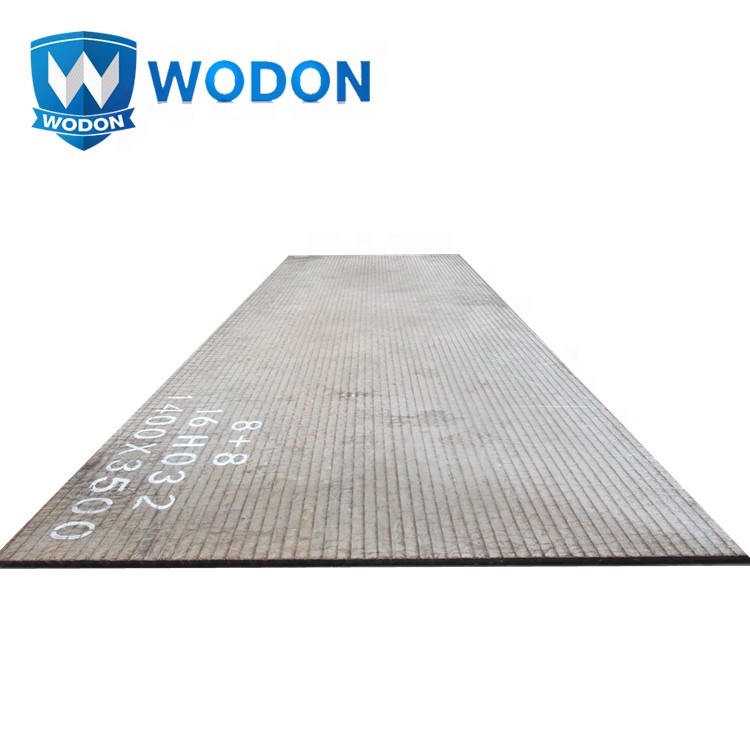
Bimetallic Welding Alloy Steel Plate: A Comprehensive Overview
Bimetallic welding alloy steel plate represents a significant advancement in material science, offering enhanced properties and performance for a wide range of industrial applications. This innovative product combines the best attributes of two different metals, creating a composite that provides superior strength, corrosion resistance, and durability. In this article, we will delve into the specifics of bimetallic welding alloy steel plate, with a focus on the products offered by Tianjin Wodon Wear-Resistant New Materials Co., Ltd.
Composition and Manufacturing Process
Bimetallic welding alloy steel plate is typically manufactured through a process known as explosion cladding or hot rolling. This involves bonding a layer of one metal to the surface of another metal substrate. The bonding process must be carefully controlled to ensure a strong, metallurgical bond between the two metals. The choice of metals used in bimetallic steel plates depends on the specific properties required for the application, such as strength, corrosion resistance, and thermal conductivity.
Tianjin Wodon Wear-Resistant New Materials Co., Ltd. specializes in the production of high-quality bimetallic welding alloy steel plates. They utilize advanced manufacturing techniques and strict quality control measures to produce plates that meet international standards. The company's products are widely used in various industries, including oil and gas, mining, chemical processing, and power generation.
Material Properties
The bimetallic welding alloy steel plate produced by Tianjin Wodon boasts exceptional mechanical properties, including:
High Strength: The composite structure provides enhanced tensile and yield strength, making the steel plate capable of withstanding heavy loads and stresses.
Corrosion Resistance: One of the metals used in the bimetallic plate is often highly resistant to corrosion, protecting the underlying substrate from environmental factors that could cause degradation.
Thermal Conductivity: The plate exhibits excellent thermal conductivity, allowing for efficient heat transfer and dissipation, which is crucial in high-temperature applications.
Abrasion Resistance: The wear-resistant properties of bimetallic steel plates make them ideal for applications involving high levels of abrasion or erosion.
Applications
Bimetallic welding alloy steel plates are used in a wide range of applications due to their unique properties. Some of the common uses include:
Oil and Gas Industry: In the oil and gas industry, bimetallic steel plates are used for pipeline construction, well casings, and valves. Their corrosion resistance and strength make them ideal for use in corrosive environments and under high-pressure conditions.
Mining Industry: The mining industry benefits from the use of bimetallic steel plates in equipment such as haul trucks, excavators, and conveyor systems. The plates' high strength and abrasion resistance extend the service life of this equipment.
Chemical Processing: In chemical processing plants, bimetallic steel plates are used for reactors, storage tanks, and piping systems. Their resistance to corrosion and high temperatures ensures safe and efficient operation.
Power Generation: Bimetallic steel plates are used in power plants for components such as turbines, heat exchangers, and ash handling systems. Their thermal conductivity and strength make them suitable for high-temperature and high-stress applications.
Quality Assurance and Customization
Tianjin Wodon Wear-Resistant New Materials Co., Ltd. is committed to providing high-quality bimetallic welding alloy steel plates. They adhere to strict quality control measures throughout the manufacturing process, ensuring that each product meets or exceeds industry standards.
The company also offers customization services to meet the specific needs of their clients. Whether it's a unique size, shape, or composition, Tianjin Wodon can tailor their products to fit the requirements of various applications.
Conclusion
Bimetallic welding alloy steel plates represent a significant advancement in material science, offering enhanced properties and performance for a wide range of industrial applications. With their exceptional mechanical properties, corrosion resistance, and thermal conductivity, these plates are ideal for use in industries such as oil and gas, mining, chemical processing, and power generation.
Tianjin Wodon Wear-Resistant New Materials Co., Ltd. is a leading manufacturer of high-quality bimetallic welding alloy steel plates, offering a wide range of products and customization services to meet the needs of their clients. With their commitment to quality and innovation, they are well-positioned to meet the challenges of today's demanding industrial environments.

 Service Hotline: